itOpened Blog · Permits & Lotteries
Lost the Angels Landing Lottery? The Loser's Playbook
A rejection email from the Angels Landing seasonal lottery feels like a closed door. The National Park Service's own published numbers tell a different story: across the program's first two years, overall odds in both lotteries averaged about 50%, and roughly half of all permits are held back for the day-before lottery. Losing round one is the normal experience — here is how the rest of the game works.
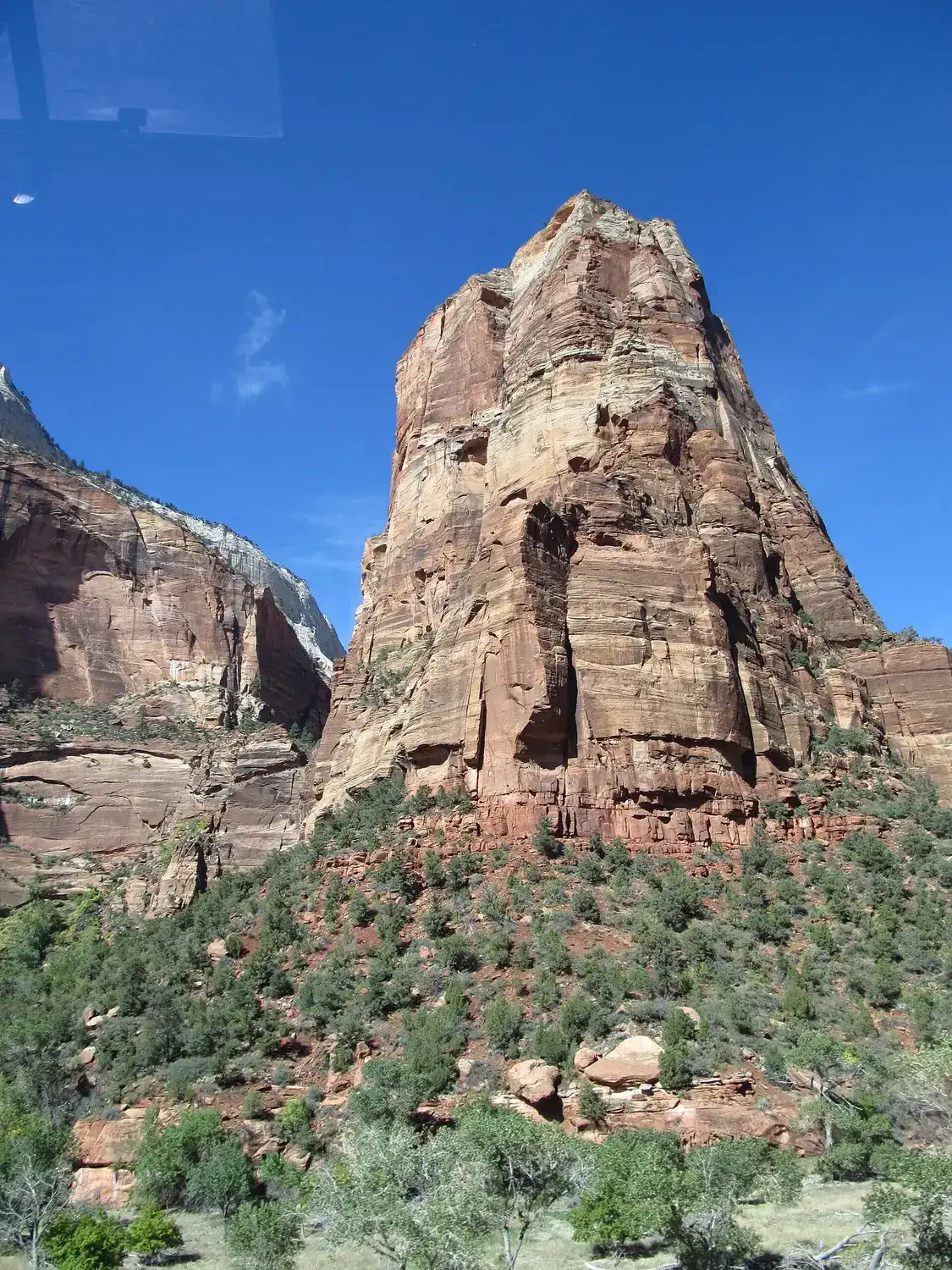
Quick answers
- What are the actual odds of winning an Angels Landing permit?
- Per the National Park Service's two-year program review (April 2024): overall odds across both the seasonal and day-before lotteries average about 50%, but the range is enormous — from 8% in the day-before lottery on the Sunday of Memorial Day weekend to 100% on some midweek days. The date matters more than the lottery.
- If I lost the seasonal lottery, can I still hike Angels Landing on my trip?
- Yes — through the day-before lottery. About half of all permits are issued there rather than in the seasonal lottery. Apply on Recreation.gov between 12:01 a.m. and 3:00 p.m. Mountain Time the day before you want to hike; results arrive by 4:00 p.m. There is no walk-up or same-day permit.
- How much does it cost to keep trying?
- $6 per application (non-refundable), covering up to six people, for either lottery — plus $3 per person charged only if a permit is issued. Each day-before attempt on a multi-day trip is a separate $6 application.
- When is the next seasonal lottery?
- Seasonal lotteries run quarterly: applications open on the 1st and close on the 20th of January, April, July, and October, with permits issued on the 25th. The winter round (for December-February hikes) closed October 20, 2026, and its permits were issued October 25 — so winter hopefuls who missed it are now in day-before territory.
Watch it with itOpened
The permit is a lottery. Your bed doesn't have to be.
Angels Landing permits never recycle into a bookable pool — we won't sell you a fake alert for one. What does recycle, daily, is Watchman Campground inventory at Zion's gate. Win the bed on the cancellation market, then play the day-before lottery from inside the park.
Proof, from our own scanners: 13 confirmed openings at Watchman since Oct 29, 2026 — each one re-verified before logging. See the live cancellation index.
Watch Watchman openingsFree to start. We never book, hold, or resell — you book it yourself, in your own account, at the normal price. Fees pay for monitoring; openings are first-come and cannot be guaranteed.
Start with the fact that reframes everything: this is not The Wave. Zion has issued nearly 400,000 Angels Landing permits since the pilot program began in April 2022 — about 200,000 a year, per the National Park Service — with daily allocations ranging from a few hundred to more than 800 permits depending on the day. The permit is required only for the half-mile chained section beyond Scout Lookout, and the program, again per the NPS, still accommodates more than 80% of the use the trail saw before permits existed. This is a rationing system with a lot of throughput, not a velvet rope. Getting rejected by it is a scheduling problem, and scheduling problems have playbooks.
The odds, honestly: it depends on the day, mostly
The NPS's two-year review of the program is unusually candid, and every lottery loser should read its central finding: depending on the day of the week and the time of year, between 10% and 100% of applicants receive permits, and the overall odds across both lotteries average about 50%. The extremes are instructive. The single hardest draw the NPS cites is the day-before lottery for the Sunday of Memorial Day weekend, at 8%. The easiest draws — random midweek days — have cleared at 100%, meaning every applicant got a permit. Same trail, same system, a twelve-fold difference driven almost entirely by which square on the calendar you picked. If your rejection came on a holiday weekend application, the system did not judge you; it judged your date.
Why losing the seasonal lottery is only half the story
About half of all Angels Landing permits are issued months ahead in the seasonal lottery, and about half are issued in the day-before lottery — the split is deliberate, so that spontaneous and late-planning visitors are not shut out by people who plan a season ahead. Most rejected applicants never internalize this. They treat the seasonal result as the verdict and stop. In reality they have only contested half the inventory, and the second half is allocated 24 hours before the hike, to a pool made up mostly of people who are actually in Zion that week. If your trip has any length to it, every additional day in the canyon is another draw.
The day-before lottery, mechanically
The rules, from the official Recreation.gov permit pages: the day-before lottery opens at 12:01 a.m. and closes at 3:00 p.m. Mountain Time on the day before your intended hike. You are notified by 4:00 p.m. whether you received a permit. You may list up to six people (including yourself) on one application; the application fee is $6 and non-refundable, and if a permit is issued, $3 per person is charged automatically to the same card. Permits are issued for specific start-time slots — before 9:00 a.m., 9:00 a.m. to noon, and after noon — so a flexible applicant who will take any slot is competing in a wider pool than one who needs a specific start. In the seasonal lottery, you may rank up to seven days, times, or ranges, and ranked-choice allocation rewards applicants who give the system more acceptable options. There is no walk-up permit, no same-day lottery, and no waitlist: the day-before draw is the last door, and it opens daily.
The fee math people resent — and what it actually buys
The complaint in every forum thread is the $6: paying for a chance feels wrong, and losing repeatedly makes it feel worse. The arithmetic, though, is worth doing coldly. A group of six applies once for $6 — a dollar a head — and pays $3 per person only on success. A solo hiker on a four-day Zion trip who enters the day-before lottery on three mornings spends $18 for three independent draws at a permit whose average success rate, per the NPS, is roughly one in two and which skews better midweek. Compare the cost of the trip those permits unlock — travel to Zion is never the cheap part — and the lottery fees are rounding error. What the $6 buys is not a permit; it buys entries into a repeated game where persistence is genuinely rewarded, because each day's draw is fresh. The expensive strategy is the opposite one: building an entire trip around a single application.
The playbook, in order
Before the trip: enter the seasonal lottery whenever your dates are even roughly known — applications run the 1st through the 20th of January, April, July, and October, with permits issued on the 25th — and use all seven ranked choices, leading with the dates you want but including midweek fallbacks. On the trip: treat every morning as a draw day. Apply in the day-before lottery for the next day, every day, starting with your first full day in the canyon — not just on your "Angels Landing day," because a permit won for Tuesday beats a plan that needed Thursday. Prefer midweek targets and accept any start-time slot. On a losing day: hike to Scout Lookout anyway. The permit gates only the chained half-mile beyond it; the West Rim Trail up to Scout Lookout — one of the great viewpoints in the park system — requires no permit at all, and a losing morning still ends there. And whatever happens with the permit: your basecamp is its own contest. Watchman Campground, the reservable campground at Zion's south entrance, runs on Recreation.gov's ordinary first-come system — no lottery, just a cancellation market. Our scanners logged 13 confirmed Watchman openings on October 30 alone. Win the bed first; then play the lottery from inside the park.
That is the honest summary of the Angels Landing system: a fair coin weighted hard by the calendar, a second lottery hiding behind the first, and a consolation hike most parks would charge admission for. Losing once tells you almost nothing. Losing on a midweek day-before draw, repeatedly, with flexible slots — that would be news. Until then, keep applying.
Watch it with itOpened
The permit is a lottery. Your bed doesn't have to be.
Angels Landing permits never recycle into a bookable pool — we won't sell you a fake alert for one. What does recycle, daily, is Watchman Campground inventory at Zion's gate. Win the bed on the cancellation market, then play the day-before lottery from inside the park.
Proof, from our own scanners: 13 confirmed openings at Watchman since Oct 29, 2026 — each one re-verified before logging. See the live cancellation index.
Watch Watchman openingsFree to start. We never book, hold, or resell — you book it yourself, in your own account, at the normal price. Fees pay for monitoring; openings are first-come and cannot be guaranteed.
Frequently asked questions
Do I need a permit for the whole Angels Landing trail?
No. A permit is required only for the half-mile chained section beyond Scout Lookout, a rule in place since April 1, 2022. The West Rim Trail up to Scout Lookout is open without a permit.
How many permits does Zion issue for Angels Landing?
Nearly 400,000 in the program's first two years (about 200,000 per year), per the National Park Service, with daily allocations from a few hundred to more than 800 depending on the day. About half are issued in the seasonal lottery and about half in the day-before lottery.
What are my odds in the day-before lottery?
The NPS reports overall odds across both lotteries averaging about 50% over the program's first two years, ranging from 8% (day-before, Memorial Day weekend Sunday) to 100% on some midweek days. Midweek applicants do markedly better than weekend applicants.
Can I get an Angels Landing permit at the park, same-day?
No. Permits are issued only through the two Recreation.gov lotteries — seasonal (months ahead) and day-before (apply 12:01 a.m.-3:00 p.m. MT, results by 4:00 p.m.). There is no walk-up or same-day channel.
Sources
- National Park Service news release, 'Zion National Park marks two years of the Angels Landing Pilot Permit Program,' April 4, 2024: nearly 400,000 permits issued since 2022 (~200,000/year); daily allocations from a few hundred to 800+; about half of permits issued in each lottery; overall odds averaging about 50%, ranging from 8% (day-before, Memorial Day weekend Sunday) to 100% (some midweek days); program accommodates over 80% of pre-program use recorded in 2019/2021 studies.
- Recreation.gov official permit pages, 'Angels Landing: Fall' and 'Angels Landing: Winter,' Zion National Park (accessed October 30, 2026): $6 non-refundable application fee covering up to six people; $3 per-person fee charged if a permit is issued; seasonal applicants may rank up to seven days/times; day-before lottery open 12:01 a.m.-3:00 p.m. MT with notification by 4:00 p.m.; permits issued in start-time slots.
- National Park Service, '2024 Angels Landing Permit Dates' (the quarterly cadence carried into the current cycle): seasonal lotteries open 8:00 a.m. MT on the 1st, close 11:59 p.m. MT on the 20th, permits issued on the 25th — winter round: applications October 1-20 for December 1-February 28 hikes, issued October 25.
- itOpened scanner log, October 30, 2026: 13 confirmed openings at Watchman Campground (engine/alerts.jsonl).
Every figure in this article traces to one of the sources above. If a number isn't sourced, we don't print it.
Last updated 2026-10-30.