ItOpened Blog · Restaurants & Experiences
Disney Dining at 60 Days: The Cancellation Wave
Walt Disney World dining is two different games: a 6:00 a.m. sprint exactly 60 days out, and — because of a strict cancellation deadline — a predictable wave of tables that frees up in the final 48 hours. Most visitors only know about the first one.

Quick answers
- When do Disney World dining reservations open?
- 60 days before the reservation date, with new inventory released at about 6:00 a.m. Eastern. Guests staying at Disney resort hotels can book for the first part of their stay (up to 10 days) starting at the 60-day mark of check-in.
- Why do Disney tables open up at the last minute?
- Disney charges a per-person no-show fee for table-service reservations not cancelled in time — guests must cancel at least 2 hours before their seating to avoid it. Rational guests who double-booked or changed plans cancel as the deadline approaches, creating a late wave of openings.
- What are the hardest Disney dining reservations?
- The perennial sellouts include Cinderella's Royal Table, Be Our Guest, Space 220, 'Ohana, Topolino's Terrace, and Blue Bayou at Disneyland — rooms that can disappear within moments of the 60-day release.
- Do people really pay for Disney dining alerts?
- Yes — an entire micro-industry exists. MouseDining charges $9/month for up to 50 alerts (a free tier offers 6 email alerts), and MouseWatcher charges from $5 per single alert or $19/month. In one published test, a planner received nearly 60 cancellation notifications for Disneyland's Blue Bayou in the five days before a visit.
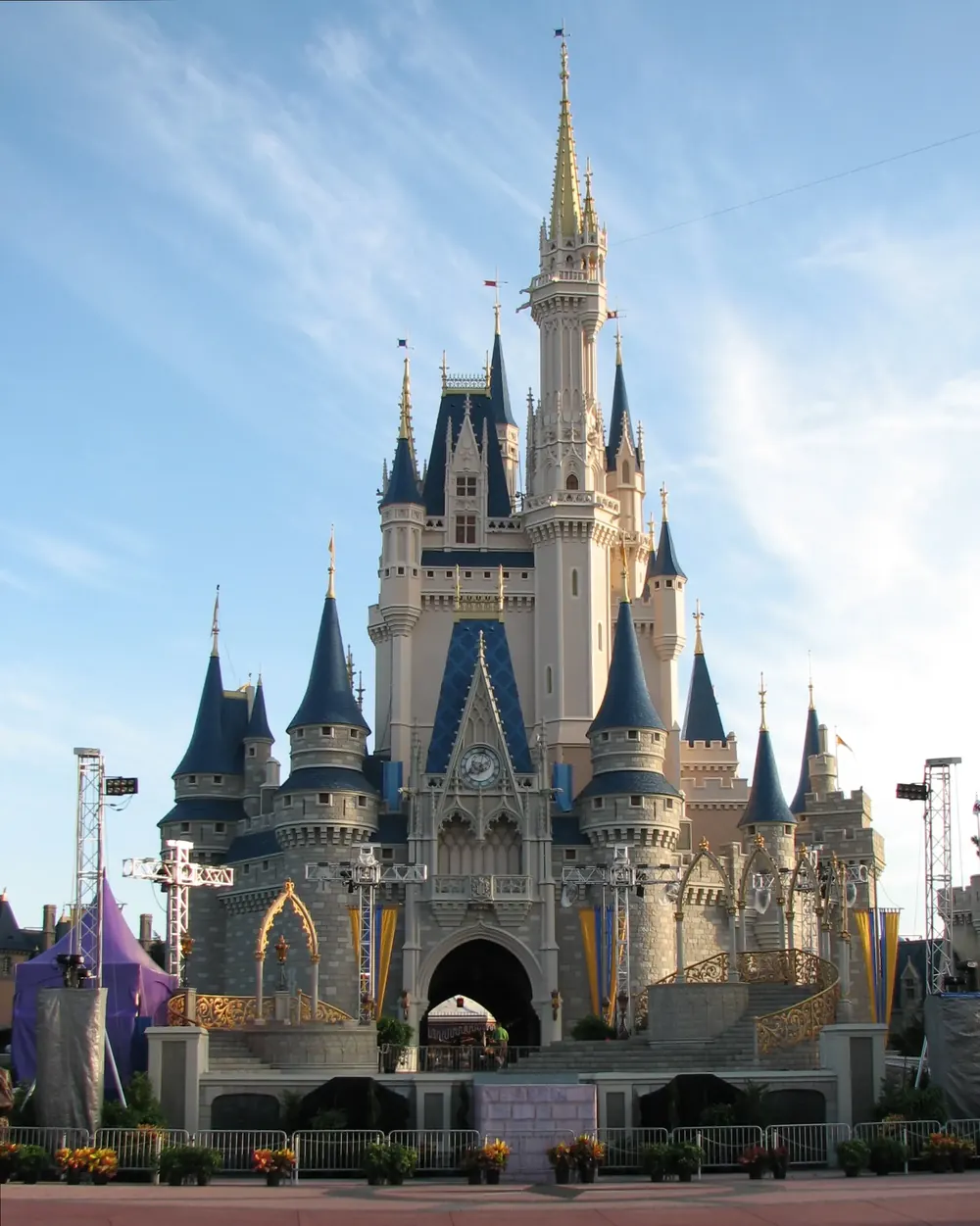
At 5:59 a.m. Eastern, sixty days before a Disney World trip, thousands of alarms are going off in the dark. At 6:00, the dining window opens — and for the famous rooms, it effectively closes again within moments. Cinderella's Royal Table, inside the castle. Be Our Guest, inside the Beast's castle. Space 220, 'Ohana at dinner, Blue Bayou inside Pirates of the Caribbean at Disneyland. If you booked your trip inside the 60-day window, or slept through your morning, the conventional wisdom says you're done. The conventional wisdom is half wrong.
Game one: the 60-day sprint
Disney releases advance dining reservations on a rolling 60-day horizon. Resort guests get a structural head start — at their 60-day mark they can book for arrival day plus up to the first 10 days of the stay — which is why the most contested restaurants on the most contested dates are often gone before off-property guests ever see them. Everyone else competes for what remains, at 6:00 a.m., by the second. It is the restaurant industry's closest equivalent of a ticket drop, and it rewards the same preparation: logged in, party size set, priority order memorized, no deliberation at the moment of release.
Game two: the cancellation wave
The sprint's losers get a second market, created by Disney's own discipline. Table-service reservations carry a per-person no-show penalty unless cancelled at least two hours before the seating. That single rule shapes behavior across the whole system:
- Speculative holders must fold. Guests who grabbed backup tables — a common, rational strategy at day 60 — have to release them or pay. The folding concentrates in the last two days before each date, and spikes again inside the final day.
- Plans genuinely change. Park days get swapped, kids get sick, a party of eight becomes five. At Disney scale, "some" churn means a continuous rain of freed tables.
- The wave is observable. When a Disney planning editor tested alert-watching before a Disneyland trip after finding zero open tables at Blue Bayou, she received nearly 60 cancellation notifications in five days — at one of the hardest restaurants in the system.
The alert industry is the proof of demand
Disney dining is the one corner of the sold-out world where the alert business is already mature, and its economics are public: MouseDining runs a free tier (six email alerts) and charges $9 a month for 50 alerts with texting; MouseWatcher sells single alerts from $5 and subscriptions from $19 a month. Two durable businesses exist solely to watch one company's restaurant calendar. That is what proven willingness-to-pay looks like, and it is exactly the model — watch the calendar, alert instantly, you book it yourself — that we operate across every category we cover.
Where ItOpened stands on Disney, honestly
Disney defends its systems more aggressively than any other booking platform we have tested, and we won't pretend otherwise: Disney coverage at ItOpened begins with deadline and strategy content — this page, the 60-day calendar discipline, the cancellation-wave playbook — while we build toward live watching through legitimate channels. If a service promises you effortless live Disney scanning today, ask it the questions our methodology page answers for our own engine. Meanwhile the transferable skills are real: set your 60-day alarm, book the best available the moment the window opens, then treat the final 48 hours before each meal as a second release — because, mechanically, it is one.
The resort-guest head start, in one worked example
The "60 days plus length of stay" rule deserves arithmetic, because its effect is larger than it sounds. Suppose your trip runs December 20–27, staying on property. Your booking window opens at 6:00 a.m. on October 21 — 60 days before check-in — and from that moment you may book dining for December 20 through December 27 in one session. An off-property guest aiming at December 27 cannot touch that date until October 28. For the single most contested meal of the trip — Christmas dinner at a signature restaurant — the on-property guest has effectively a 67-day window and a full week's head start on every seat. None of this is secret; Disney publishes the rule. But first-time guests consistently underrate it, book the famous restaurants for late in the trip first (the correct order — the days where your head start is longest), and treat day 60 as the beginning of planning rather than the execution of a plan made weeks earlier.
Disneyland is a different park with the same wave
Disneyland's dining shares the 60-day window and the 2-hour cancellation discipline, with its own most-wanted rooms — Blue Bayou, inside the Pirates of the Caribbean ride, is the connoisseur's impossible table, and the published alert-test that counted ~60 cancellation notifications for it in five days was a Disneyland story, not a Florida one. Seasonal character dining at the Disneyland Resort hotels (Goofy's Kitchen's holiday incarnations are the running example) follows the same 60-day logic with event-driven surges. The transferable point stands on both coasts: the release builds the first market, the cancellation rule builds the second, and the second market is bigger than almost anyone believes until they watch it.
What an alert actually buys you
Be precise about the product category, because the Disney corner proves its value and its limits simultaneously. An alert buys time compression: the gap between a table freeing and your phone buzzing shrinks from "whenever you next thought to check" to seconds. It does not buy the table — Disney's inventory stays first-come, other alert subscribers are racing you, and a noon alert for a 7 p.m. seating still requires you to complete the booking. The services that thrive here (MouseDining at $9/month, MouseWatcher from $5 an alert) survive because time compression at Disney scale is worth real money to people whose alternative is refreshing an app in a theme park. That is the honest pitch, for them and for us: not certainty — speed.
Frequently asked questions
What time exactly do Disney dining reservations open?
New dates roll out at about 6:00 a.m. Eastern, 60 days ahead. Set up before 6:00 — the contested rooms can be gone in the first minutes.
How late can I cancel a Disney dining reservation without a fee?
At least 2 hours before the reservation time, per Disney's cancellation policy for table-service restaurants; missing the window risks a per-person no-show fee.
Is it worth checking for openings the week of my trip?
It's the highest-value checking there is. The 2-hour cancellation rule forces speculative holders to release tables in the final 48 hours, producing exactly the late wave described above.
Does ItOpened scan Disney dining today?
Not yet — and we say so rather than selling it early. Disney is the most heavily defended booking environment we've tested. Our Disney coverage launches with deadline/strategy content while live watching is built through legitimate routes.
Sources
- MouseDining (mousedining.com): pricing and product pages — free tier with 6 email alerts; $9/month for 50 alerts with SMS; 60-day booking window explainers (accessed October 2026).
- MouseWatcher (mousewatcher.com) FAQ: single alerts from $5; subscriptions from $19/month; alerts-only model (never books on your behalf).
- Parade (Oct 25, 2026), 'The Disney Dining Trick Experts Use': Mickey Visit's Emily Midgley on reservation-watching services; ~60 Blue Bayou cancellation notifications in five days; Disney's rule that table-service reservations must be cancelled at least 2 hours ahead to avoid a per-person penalty.
- MouseDining blog (Oct 2026): holiday character-dining coverage confirming the 60-day window and cancellation-driven reopenings at Walt Disney World and Disneyland resort restaurants.
Every figure in this article traces to one of the sources above. If a number isn't sourced, we don't print it.
Last updated 2026-10-30.