itOpened Blog · Cancellation Data
Which Campgrounds Recycle Fastest?
Our first survival post measured the whole market: a median opening life of 1h 37m across 118 completed life cycles. But an average across campgrounds hides the thing a hunter actually needs — your campground's clock. Here is the per-campground table for every campground with at least four completed life cycles so far, fastest to slowest: from Fort Pickens Campground at 33m to Black Rock Campground at 6h 29m.
Quick answers
- Which campground's openings disappear fastest?
- Of the campgrounds with at least four completed life cycles in our closure log, Fort Pickens Campground is fastest: a median survival of 33m across 10 completed openings. The slowest is Black Rock Campground at 6h 29m (n=5).
- How does Watchman Campground compare?
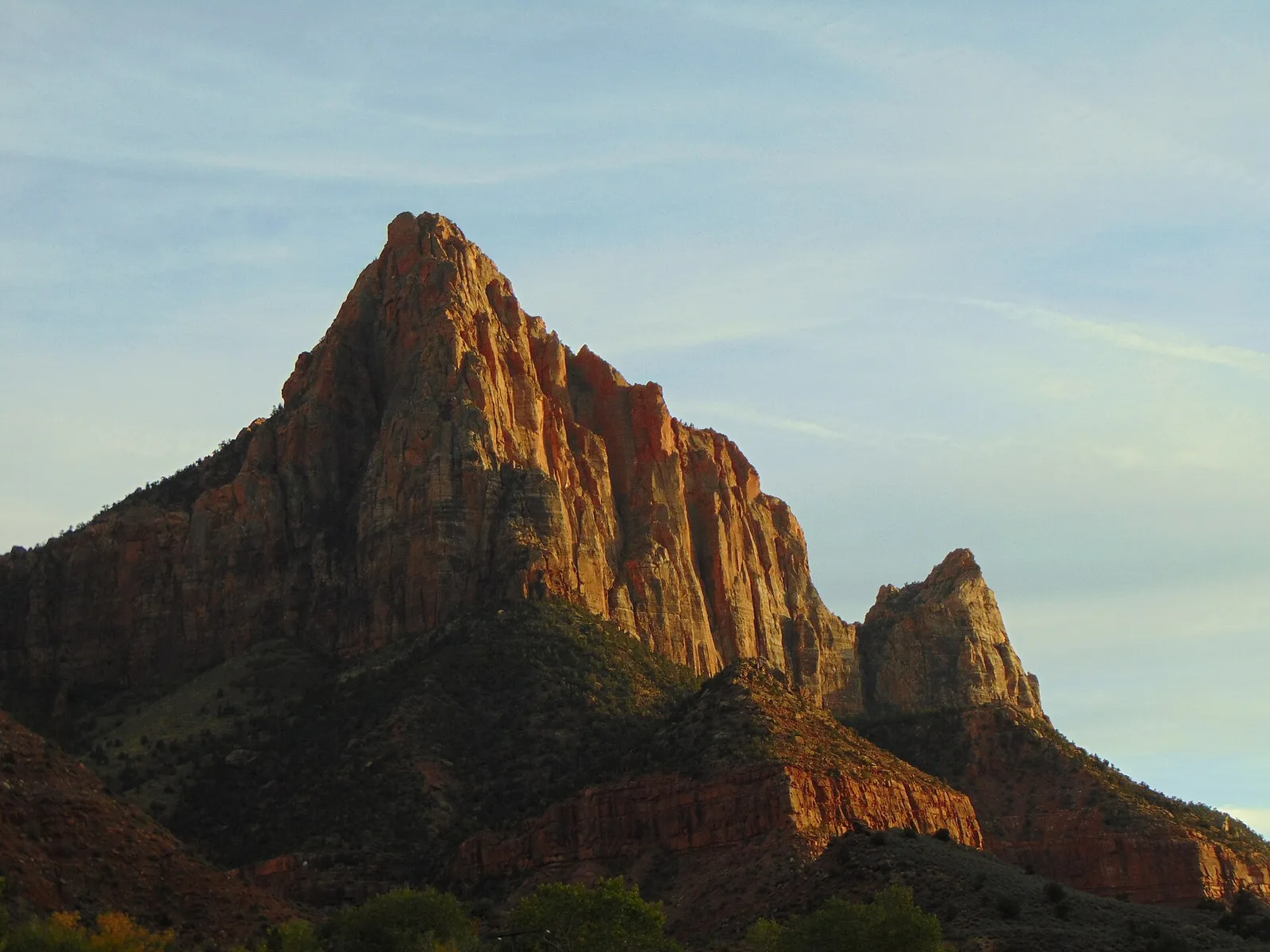
- Watchman's completed openings (n=11) sit in the faster half of the table — Zion's basecamp recycles briskly, which matches its demand: a small reservable campground under a very famous park.
- Can I hunt a slow campground by hand?
- A slow clock is the one case where frequent manual checking has a fighting chance: at 6h 29m median survival (Black Rock Campground), checking every couple of hours samples a real share of openings. At 33m (Fort Pickens Campground), manual checking is sampling minutes-wide windows with hours-wide gaps.
- How big are these samples?
- Small, and labeled: 118 completed life cycles across all campgrounds on October 30, 2026, with the per-campground n printed in the table. Only campgrounds with n of at least 4 are ranked. Treat the order as a first reading, not a law.
Watch it with itOpened
Watchman's clock runs fast. A text beats a refresh.
Watchman sits in the faster half of the recycling table — its openings are measured in tens of minutes, not days. Our scanners poll Zion's basecamp around the clock and text you while the site is still alive.
Proof, from our own scanners: 28 confirmed openings at Watchman since Oct 29, 2026 — each one re-verified before logging. See the live cancellation index.
Watch Watchman openingsFree to start. We never book, hold, or resell — you book it yourself, in your own account, at the normal price. Fees pay for monitoring; openings are first-come and cannot be guaranteed.
In our first survival measurement we published the market-wide figure: across every completed opening life cycle, the median cancelled site was re-booked within 1h 37m. That number is true and, for an individual hunter, nearly useless — because nobody hunts "the market." You hunt Watchman, or Fort Pickens, or Upper Pines, and each of those clocks runs at its own speed. This post breaks the same dataset open by campground.
The table: median survival by campground
Sample rules, up front: an opening counts only when it completed its full life cycle in our closure log — detected, confirmed, then found gone by two consecutive polls. Campgrounds needed at least four completed cycles to be ranked; the rest are still accumulating and we would rather show a shorter table than dress up samples of one and two as findings. All observations are from October 30, 2026, for stays in November and December 2026.
| Campground | Completed openings (n) | Median survival |
|---|---|---|
| Fort Pickens Campground | 10 | 33m |
| Watchman Campground | 11 | 35m |
| Elkmont Campground | 4 | 41m |
| Assateague Island National Seashore Campground | 5 | 47m |
| Upper Pines Campground | 24 | 1h 42m |
| Chisos Basin Campground (Big Bend, TX) | 13 | 1h 51m |
| Rio Grande Village (Big Bend, TX) | 12 | 2h 19m |
| Big Meadows Campground - Shenandoah (VA) | 13 | 3h 31m |
| Black Rock Campground | 5 | 6h 29m |
Reading the spread
The fastest and slowest clocks differ by more than elevenfold — 33m at Fort Pickens Campground against 6h 29m at Black Rock Campground — under identical mechanics, on the same booking platform, in the same week. Nothing about "campsites" as a category explains that; it is local demand wearing a watch. A fast campground is one where the line of people waiting is long and itself automated: openings are not expiring unnoticed, they are being taken, quickly, by whoever's refresh — human or machine — lands first. A slow campground's openings linger because the queue behind them is thinner or less obsessive, which is useful intelligence in itself: slow does not mean unpopular, it means the second market clears at a human pace.
Two patterns are worth naming carefully, because the sample is young. Small, famous, and reservable is fast. Watchman — Zion's only reservable in-park campground for most visitors — sits in the faster half, and Fort Pickens, a single beloved Gulf Islands campground, tops the table. Scarcity of sites plus breadth of fame is the fast-clock recipe. Big Valley-floor inventory is mid-pack, not instant. Upper Pines' median (1h 42m, n=24) is slower than the fastest tier — plausibly because its cancellation flow is deep enough (it produced 55 openings in our first window) that individual openings compete with the next one arriving. Depth of flow and speed of death are different variables, and a good hunting ground wants both: many openings, each living just long enough to catch.
Strategy by clock speed
Fast clock (under an hour at the median): notification speed is everything. At Fort Pickens Campground's 33m median, an email digest is an obituary and a twice-daily check is a lottery ticket. The only strategies that work are a text the moment the opening confirms, and a booker who can act on it in minutes — logged in, dates decided, flexible on site. Middle clock (one to three hours): alerts still win, preparation decides. Most hunters in this band lose not on detection but on dithering — the site is alive when the text lands and gone when they finish comparing loops. Decide your acceptable sites and dates before the alert, not after. Slow clock (several hours): manual checking becomes viable — barely. At 6h 29m, a disciplined check every two hours will genuinely intersect a meaningful share of openings. It is the only band where we will tell you hand-checking is a rational plan, and even there it is a plan that has to hold for days, including the 17% of openings that appear overnight.
What would change these rankings
Season, first of all: this is one shoulder-season day, and a July table for the same campgrounds could compress every clock on it. Sample size, second: the n column is printed in the table because several of these medians rest on single-digit counts, and we will keep re-publishing as the log grows rather than letting a day-one ranking harden into folklore. Third, right-censoring: openings still alive when the sample closed are excluded, which biases every median here downward — the true clocks are somewhat slower than printed, for the fast campgrounds most of all, since a fast campground's rare long-lived opening is the likeliest to be censored. We state the bias rather than hide it; the live counts are always on the cancellation index, and the method is on the methodology page.
The takeaway that survives every caveat: there is no universal answer to "how long have I got?" There is a per-campground answer, it varies by an order of magnitude, and now — for the first time, as far as we can tell — it is being measured and published instead of guessed. Find your campground's row before you decide how to hunt it.
Watch it with itOpened
Watchman's clock runs fast. A text beats a refresh.
Watchman sits in the faster half of the recycling table — its openings are measured in tens of minutes, not days. Our scanners poll Zion's basecamp around the clock and text you while the site is still alive.
Proof, from our own scanners: 28 confirmed openings at Watchman since Oct 29, 2026 — each one re-verified before logging. See the live cancellation index.
Watch Watchman openingsFree to start. We never book, hold, or resell — you book it yourself, in your own account, at the normal price. Fees pay for monitoring; openings are first-come and cannot be guaranteed.
Frequently asked questions
Which campground recycles cancellations fastest?
In the October 30, 2026 closure log, among campgrounds with at least four completed opening life cycles, Fort Pickens Campground was fastest with a median survival of 33m (n=10). Black Rock Campground was slowest at 6h 29m (n=5).
Why do some campgrounds' openings last so much longer?
The mechanics are identical; the queue behind the opening is not. Openings end when someone books them, so survival time is a demand gauge: famous, site-scarce campgrounds clear in minutes-to-an-hour, while campgrounds with a thinner or less automated waiting crowd clear in hours.
How was survival measured?
Each confirmed opening is followed until two consecutive polls find it gone. Survival is the elapsed time from first confirmed detection to confirmed disappearance, precise to within the poll interval (150 seconds on the hot tier, 600 seconds on the standard tier).
Will these rankings change?
Almost certainly. They rest on one shoulder-season day (118 completed life cycles total, per-campground n printed in the table) and exclude openings still alive at sample close, which biases medians downward. We republish as the log grows.
Sources
- itOpened scanner closure log (engine/closures.jsonl), October 30, 2026: 118 completed opening life cycles; per-campground medians computed at build time for campgrounds with n of at least 4 (9 campgrounds ranked). Overall median survival 1h 37m.
- itOpened production scanner alert log (engine/alerts.jsonl), Oct 29–30, 2026: 55 confirmed Upper Pines openings and 76 of 435 non-Cape-Point openings detected between 10 p.m. and 6 a.m. Eastern.
- itOpened, 'How long does a cancelled campsite stay open?' (/blog/how-long-cancelled-campsites-stay-open/): the market-wide survival measurement this post breaks down by campground.
- itOpened methodology (/methodology/): poll cadence, confirmation standard, and closure definition (two consecutive gone polls).
Every figure in this article traces to one of the sources above. If a number isn't sourced, we don't print it.
Last updated 2026-10-30.