itOpened Blog · Cancellation Data
Joshua Tree's Campgrounds, Counted
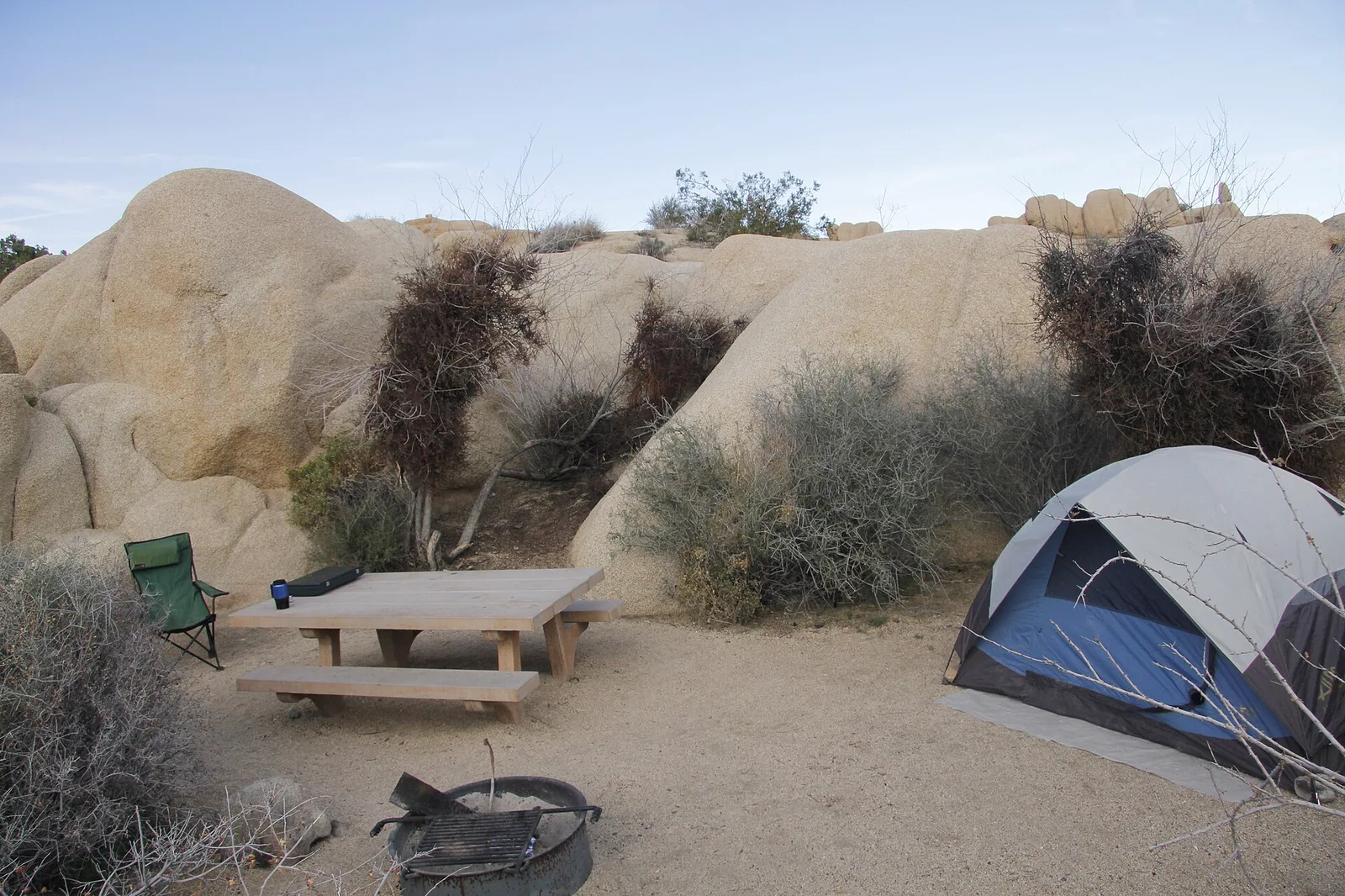
Joshua Tree is the third park system in our log to pass a thousand: 1,393 confirmed openings since Oct 29, 10:54 PM ET across its five watched reservation campgrounds and the Indian Cove group area — 9.3% of every non-Cape opening we have verified, from 367 distinct campsites. But Joshua Tree's structure is the opposite of the release-driven parks this blog has measured. There is no cliff here: lead times scatter across the calendar the way cancellations do (median lead 7 days; just 21 openings at exactly 14 days and 17 at exactly 30). What the park has instead is a survival spread. Cottonwood Campground's openings die at a 1h 40m median; Black Rock's at 2h 40m; Jumbo Rocks' at 3h 25m; Indian Cove's at 5h 29m; and little Ryan Campground's openings live a median 4h 30m — sixteen times longer than Cottonwood's, in the same park, in the same ten days. One park, counted campground by campground.
Quick answers
- How many Joshua Tree campsite openings are there?
- 1,393 confirmed openings across the park's five watched reservation campgrounds — Jumbo Rocks 441, Indian Cove 331, Black Rock 263, Cottonwood 225, Ryan 122 — plus 11 at the Indian Cove group area, from 367 distinct campsites, for stays 2026-11-01 – 2026-12-31.
- Which Joshua Tree campground recycles fastest?
- Cottonwood, at the desert's south entrance: a median survival of 1h 40m across 157 completed cycles. Black Rock is next at 2h 40m (n=177). The slowest is Ryan, the park's smallest watched campground, at 4h 30m (n=86).
- Is Joshua Tree's flow a release or cancellations?
- Cancellations, by its shape. A release produces a wall at one lead time; Joshua Tree's openings spread across lead times with a median of 7 days, and only 21 of 1,393 landed at exactly 14 days — nothing like the staged-release signatures measured at Big Meadows or Big Bend.
- What do Joshua Tree openings look like?
- Mostly single nights: 861 of 1,393 (61.8%). The deepest stay dates are the season's first full weekend: Nov 10 (104); Nov 06 (100); Nov 08 (96) — November is the heart of Joshua Tree's cool-season rush, and the log's first days caught its opening weekend at full depth.
Watch it with itOpened
Cottonwood openings live about an hour. Jumbo Rocks produced 300+ openings in ten days.
Jumbo Rocks Campground produced 441 confirmed openings in ten days of watching — the deepest flow in Joshua Tree — and its openings survive a median 3h 25m, long enough to act on if the alert reaches you when it fires. Our scanners poll it around the clock and text you when the next opening confirms.
Proof, from our own scanners: 441 confirmed openings at Jumbo Rocks since Oct 29, 2026 — each one re-verified before logging. See the live cancellation index.
Watch Jumbo Rocks openingsFree to start. We never book, hold, or resell — you book it yourself, in your own account, at the normal price. Fees pay for monitoring; openings are first-come and cannot be guaranteed.
The measurement, in one block
Headline: 1,393 confirmed Joshua Tree openings across six watched facilities; median survival from 1h 40m at Cottonwood (n=157 completed cycles) to 4h 30m at Ryan (n=86); no lead-time cliff — 21 openings at exactly 14 days, 17 at exactly 30, median lead 7 days.
As of Nov 11, 05:38 AM ET — measurement window Oct 29, 10:54 PM ET – Nov 11, 05:38 AM ET (Eastern); stays 2026-11-01 – 2026-12-31; the Indian Cove group area's survival is withheld (no completed cycles).
Method: confirmed openings from the production alert log (each re-fetched and verified before logging), filtered to the six watched Joshua Tree facilities; survival from the closure log's completed, unambiguous life cycles for the same facilities; lead = stay start date minus detection date (Eastern).
The park table first:
| Campground | Confirmed openings | Distinct campsites | Median survival |
|---|---|---|---|
| Jumbo Rocks Campground | 441 | 111 | 3h 25m (n=306) |
| Indian Cove Campground | 331 | 83 | 5h 29m (n=209) |
| Black Rock Campground | 263 | 79 | 2h 40m (n=177) |
| Cottonwood Campground (Ca) | 225 | 57 | 1h 40m (n=157) |
| Ryan Campground | 122 | 29 | 4h 30m (n=86) |
| Indian Cove Group | 11 | 8 | withheld — too few completed cycles |
The frame around that table is the National Park Service's own campground structure. Joshua Tree has nine developed campgrounds with about 500 campsites in all; five family campgrounds — Black Rock, Cottonwood, Indian Cove, Jumbo Rocks and Ryan — plus the Sheep Pass group campground take reservations through Recreation.gov, up to six months ahead, while Belle, Hidden Valley and White Tank remain first-come, first-served and can never appear in a cancellation log at all. Our scanner watches the five reservation campgrounds and the Indian Cove group sites: the entire reservable family-campground system of the park. What it records, in the first ten days of the park's prime season, is more than a thousand openings — the reservable system does not merely fill; it churns, constantly, at every campground in it.
No cliff — a cancellation market, honestly shaped
The first thing to notice is what is missing. At Big Meadows and Big Bend, the lead-time distribution is dominated by release walls — inventory surfacing at exactly 14 or exactly 4 days, on a published or plainly visible schedule. Joshua Tree shows no such wall. Its openings arrive at every lead time from same-day to two months, thickest in the 0–8-day band where cancellations live, with a median lead of 7 days. The two candidate release leads are rounding errors: 21 openings at exactly 14 days (1.5% of the park's flow) and 17 at exactly 30. That is the fingerprint of a six-month booking window doing what it does — sites reserved months ahead, then handed back one at a time as plans change — and it makes Joshua Tree the cleanest pure-cancellation dataset in this log: a thousand openings whose timing nobody scheduled.
Five clocks
The park's real structure is in the survival column, and it does not follow size. Cottonwood, the 62-site campground at the park's south entrance (directory count), is the fastest clock in the park at a 1h 40m median across 157 completed cycles — openings there are claimed about as fast as our confirmation polls can establish that they existed. Black Rock, up by Yucca Valley, runs 2h 40m (n=177). Jumbo Rocks, the park's largest campground and its deepest flow at 441 openings, runs 3h 25m (n=306): the biggest pool of hunters and the biggest supply, settling in the middle. Indian Cove runs slower still at 5h 29m (n=209). And Ryan — 37 directory sites, 122 openings from just 29 distinct campsites — keeps its openings for a median 4h 30m (n=86), sixteen times Cottonwood's clock. The mechanism is labelled interpretation: Ryan is small, central and climber-loved, but its openings are disproportionately single nights (67.2% of its flow) on scattered dates — inventory a hunter has to be able to use, on the exact night, before it is worth claiming, so it waits. Cottonwood's openings, by contrast, sit on the park's through-route at the start of peak season, in front of the deepest passing demand in the system.
What this means for a hunter
Match your reflexes to the campground, because the log says they are different hunts sharing one park map. Cottonwood and Black Rock are alert games: at 1h 40m and 2h 40m medians, the opening is gone before a second manual check would run — the watch has to exist before the opening does. Jumbo Rocks and Indian Cove, at 3h 25m and 5h 29m, reward a prompt reply the same day. Ryan is the one Joshua Tree campground where a morning check can still win: a 4h 30m median means yesterday's opening is often still tonight's campsite. And everywhere in the park, assemble rather than wait: 61.8% of all Joshua Tree flow is single nights, so a three-night trip is usually three separate wins — which is why the deepest stay dates in the log (Nov 10 (104); Nov 06 (100); Nov 08 (96)) are weekend fragments, not weekend blocks.
The limits, plainly
The window is ten days at the very start of Joshua Tree's cool season; nothing here describes the park in March, let alone in August heat, when several of these campgrounds have historically run reduced seasons. Survival medians rest on completed cycles only, and the Indian Cove group area's is withheld outright — 11 openings and zero completed cycles cannot carry a statistic, so this post prints its count and nothing else. The first-come campgrounds are invisible to this method by construction. What survives the caveats is the count and the spread: 1,393 verified openings, no release schedule underneath them, and a sixteen-fold difference in how long an opening waits — between two campgrounds twenty minutes apart.
Watch it with itOpened
Cottonwood openings live about an hour. Jumbo Rocks produced 300+ openings in ten days.
Jumbo Rocks Campground produced 441 confirmed openings in ten days of watching — the deepest flow in Joshua Tree — and its openings survive a median 3h 25m, long enough to act on if the alert reaches you when it fires. Our scanners poll it around the clock and text you when the next opening confirms.
Proof, from our own scanners: 441 confirmed openings at Jumbo Rocks since Oct 29, 2026 — each one re-verified before logging. See the live cancellation index.
Watch Jumbo Rocks openingsFree to start. We never book, hold, or resell — you book it yourself, in your own account, at the normal price. Fees pay for monitoring; openings are first-come and cannot be guaranteed.
Frequently asked questions
How many campgrounds does Joshua Tree have?
Nine developed campgrounds with about 500 campsites, per the National Park Service. Five family campgrounds — Black Rock, Cottonwood, Indian Cove, Jumbo Rocks and Ryan — plus the Sheep Pass group campground take reservations through Recreation.gov up to six months ahead; Belle, Hidden Valley and White Tank are first-come, first-served. Our log watches the reservation campgrounds: 1,393 confirmed openings so far.
Which Joshua Tree campground is hardest to get?
By recycling speed, Cottonwood: its openings survive a median 1h 40m (n=157 completed cycles), with Black Rock next at 2h 40m. Jumbo Rocks produces the most openings (441) and a 3h 25m median — deep flow, middle clock.
When do Joshua Tree cancellations appear?
At every lead time — the distribution has no release wall. The median opening was detected 7 days before the stay, and the flow is thickest inside two weeks. Only 21 of 1,393 openings landed at exactly 14 days of lead.
Can I get a multi-night Joshua Tree stay from cancellations?
Usually by assembling one: 861 of the park's 1,393 openings (61.8%) are single nights. Ryan Campground is the exception worth watching slowly — its openings survive a median 4h 30m.
Sources
- itOpened production scanner alert log (engine/alerts.jsonl), Oct 29, 10:54 PM ET – Nov 11, 05:38 AM ET: 17,389 confirmed openings in total, 14,987 excluding Cape Point Campground's 2,402 rolling-release alerts. Joshua Tree facilities: Jumbo Rocks Campground 441; Indian Cove Campground 331; Black Rock Campground 263; Cottonwood Campground (Ca) 225; Ryan Campground 122; Indian Cove Group 11 — park total 1,393 (9.3% of the non-Cape total) from 367 distinct campsites. Median lead 7 days; at exactly 14 days: 21; at exactly 30 days: 17; single nights 861 (61.8%); deepest stay dates: Nov 10 (104); Nov 06 (100); Nov 08 (96). All figures computed from the log at build time.
- itOpened scanner closure log (engine/closures.jsonl), sample closing Nov 11, 05:38 AM ET: completed unambiguous cycles — Cottonwood n=157, median survival 1h 40m; Black Rock n=177, median 2h 40m; Jumbo Rocks n=306, median 3h 25m; Indian Cove n=209, median 5h 29m; Ryan n=86, median 4h 30m; Indian Cove Group n=0 (median withheld). Ambiguous records excluded; Cape Point excluded. Censoring note: completed cycles only — openings still live at build time are not in any median.
- National Park Service, Joshua Tree National Park, campground pages (nps.gov/jotr; accessed 2026-11-08): nine developed campgrounds, about 500 campsites; Black Rock, Cottonwood, Indian Cove, Jumbo Rocks and Ryan campgrounds and the Sheep Pass group campground are reservable through Recreation.gov up to six months in advance; Belle, Hidden Valley and White Tank are first-come, first-served.
- itOpened campground directory (data/directory.db, built from the Recreation.gov RIDB export): directory campsite counts — Jumbo Rocks 124, Indian Cove 114 (including group sites), Black Rock 99, Cottonwood 62, Ryan 37 — all parented to Joshua Tree National Park.
- itOpened, 'Big Meadows' two release waves, measured' (/blog/big-meadows-two-release-waves-measured/) and 'Big Bend's campgrounds, counted' (/blog/big-bend-campgrounds-counted/): the release-wall parks this post's cliff-free Joshua Tree distribution contrasts with.
- itOpened methodology (/methodology/): watch registry, two-poll confirmation standard, and watch window (stays from November 1, 2026 onward).
Every figure in this article traces to one of the sources above. If a number isn't sourced, we don't print it.
Last updated 2026-11-08.